
Clear Facts About
Safe Access to GLP-1 Medications
You may have heard of GLP-1 medications. Understand the
key differences between FDA-approved GLP-1 medications
and compounded versions, how they are made, and what risks
you should know about before choosing one.
What Are GLP-1 Medications?
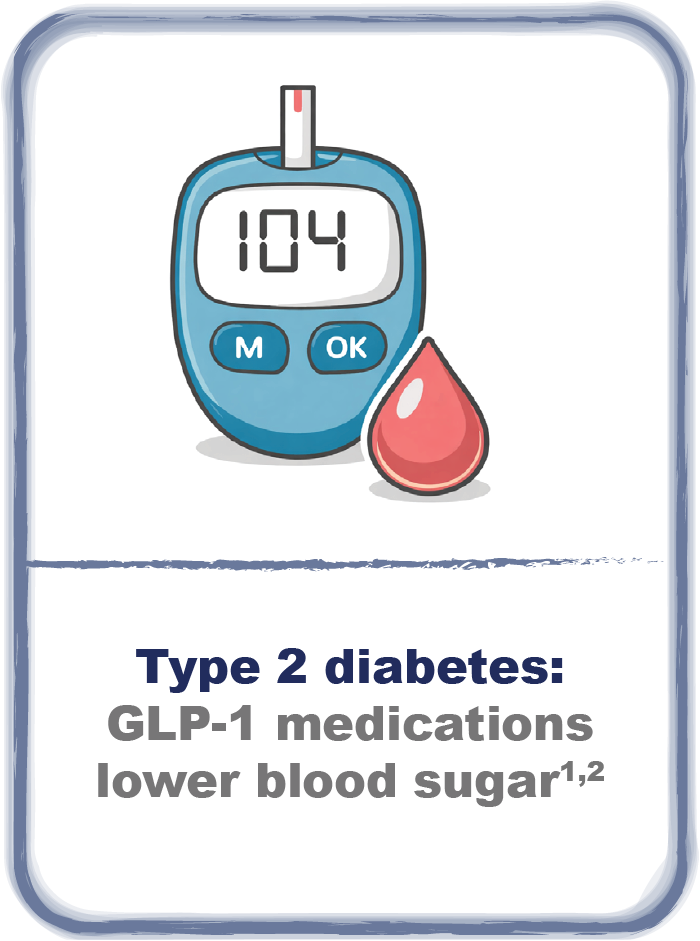
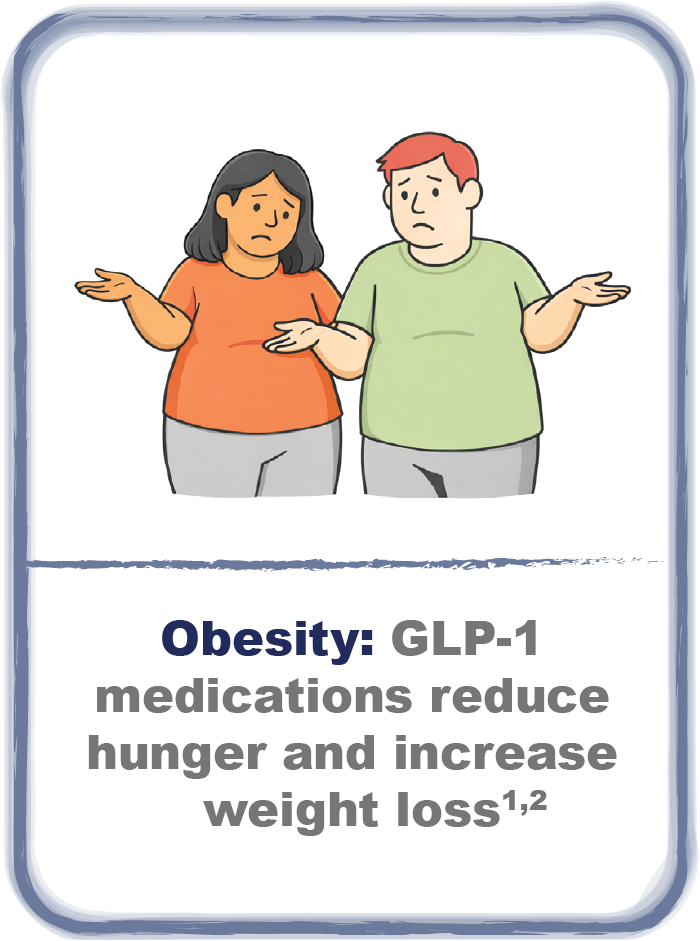
GLP-1 medications are prescription drugs that act like a natural hormone in your body. They are used to treat type 2 diabetes and obesity.1,2
How Can I Access GLP-1 Medications?

Know The "Red Flags"
Know the “red flags” of websites offering GLP-1 medications

Know The Difference
Understand the difference between FDA-approved GLP-1 products and compounded GLP-1 products
What Are “Red Flags” About Websites Offering GLP-1 Products?
- Sold through social media, online marketplaces, or individuals without a prescription or supervision by a licenced HCP2,4,5
- Promise rapid or dramatic weight loss without explaining potential adverse events2,4,5
- Offered in unapproved forms (drops, lozenges, patches, nasal sprays)2,4,5
- Sold in large multi-dose vials with confusing instructions5
- Labeled “research grade,” “research use only,” or “not for human consumption”2,4,5,7,8
- Active ingredient is not from an FDA-registered manufacturer7
- Active ingredient is the salt form of an FDA-approved product9
What Is The Difference Between FDA-approved GLP-1 Medications And Compounded GLP-1 Products?
| ----------------------- | FDA-approved GLP-1 Medications | Compounded GLP-1 Medications |
|---|---|---|
| What they are | Brand-name medicines approved by the FDA | Custom-made versions prepared by a compounding pharmacy |
| FDA approval | Approved by the FDA based on safety, quality, and how well they work | Not approved by the FDA |
| Ingredients | Must contain the exact ingredient and dose listed on the label | May vary in ingredients or strength |
| Safety checks | Made in large facilities with strict quality rules | Quality depends on the pharmacy making it |
Are There Any Risks Associated With Compounded GLP-1s?
Compounded GLP-1 products are higher risk than FDA-approved medications.10
- The FDA does not review pre-market safety and quality testing data for compounded products10
- Compounded GLP-1 medications may have a higher risk of adverse events, incorrect or unclear dosing, and contamination11-13
- The FDA’s Adverse Event Reporting System database lists more than 900 adverse health events associated with compounded
GLP-1s, 17 of which involved deatha,9
When Would a Patient Need a Personalized Compounded GLP-1 Medication?
Personalized compounded GLP-1 medications are made or mixed by a pharmacist to meet the needs of specific
patient, based on a doctor’s prescription.10,14
A doctor may prescribe a personalized compounded GLP-1 medication if a patient:
- Is allergic or hypersensitive to an ingredient in brand-name GLP-1 medications10,14
- Needs a dosage strength that isn’t available from the brand-name GLP-1 medications10,14
- Needs a different formulation for a medical reason10,14
How Do I Know If I Require a Personalized Compounded GLP-1 Medication?
Discuss with your doctor:
- Is this medication being compounded for a true medical need?
- Are there any contraindications or risks specific to me?
- What side effects should I expect, and when should I contact you?
- How will we monitor my labs and progress?
As of December 31, 2024.
1. https://my.clevelandclinic.org/health/treatments/13901-glp-1-agonists (Accessed May 27, 2026). 2. An Open Letter From Eli Lilly and Company Regarding Certain Practices Related to Mounjaro® and Zepbound®, Eli Lilly & Co. (June 20, 2024). 3. Robb, M et al. Direct-to-Patient Prescription Drugs: A Framework to Help Pharmaceutical Manufacturers Evaluate Their Strategy, Milliman (Mar. 19, 2026). 4. Updated Consumer Alert: Attorney General Raoul Reminds Illinois Residents to Be Vigilant When Seeking GLP-1 Drugs for Weight Loss, Off. of the Ill. Att’y Gen. (Jan. 3, 2025). 5. Consumer Alert: Attorney General Alan Wilson Warns Consumers to Be Cautious When Purchasing Unapproved and Compounded Weight Loss Medications, S.C. Att’y Gen. (Jan. 3, 2025). 6. Letter from Marsha Blackburn, U.S. Sen., & Jonathan Skrmetti, Att’y Gen. of Tenn., to Andrew N. Ferguson, Chairman, Fed. Trade Comm’n 2 (July 17, 2025). 7. Letter from William Tong, Att’y Gen. of Conn., to Conn. Healthcare Providers, re: Compounded GLP-1 Weight Loss Medications 3 (May 21, 2025). 8. Letter from Jonathan Skrmetti, Tenn. Att’y Gen., et al., to Sara Brenner, Acting Comm’r, Food & Drug Admin., re: GLP-1 Drugs (Feb. 19, 2025). 9. Letter from Jim Banks, U.S. Sen., to Sara Brenner, Acting Comm’r of Food & Drugs (Apr. 2, 2025). 10. https://www.fda.gov/drugs/human-drug-compounding/compounding-and-fda-questions-and-answers (Accessed May 27, 2026). 11. https://www.fda.gov/drugs/human-drug-compounding/fda-alerts-health-care-providers-compounders-and-patients-dosing-errors-associated-compounded (Accessed May 27, 2026). 12. McCall KL, et al. Expert Opin Drug Saf. 2026;25(3):581-588. 3. Neumiller JJ, et al. Diabetes Care. 2025;48(2):177-181. 14. Rumore, MM. Pharmacy Practice In Focus: Health Systems. 2025:14(4).
The information provided is for educational and informational purposes only. It is not intended to be a substitute for professional medical advice.