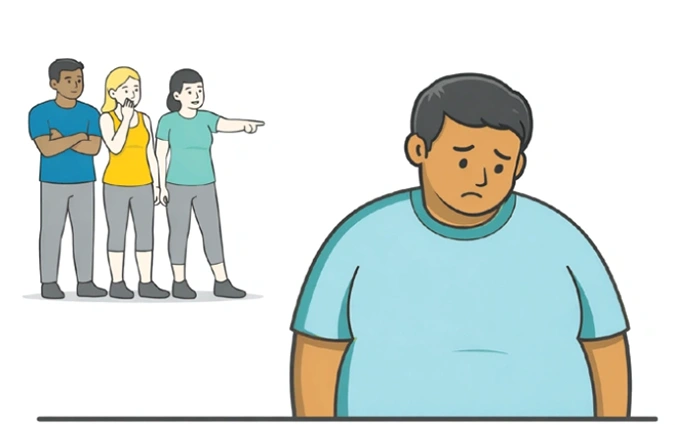
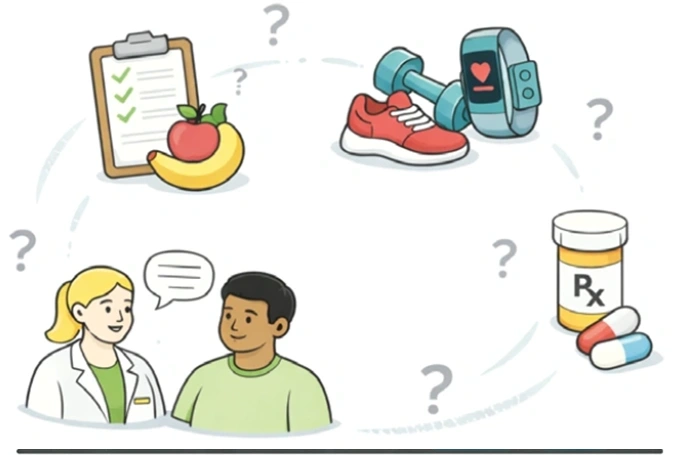
Obesity is a chronic disease that impacts 40% of American adults. Knowing the factors that influence it can help you take informed steps toward better health.1
What is Obesity?
Obesity is a long-term, but manageable disease. Obesity happens when a high level of body fat affects your overall health.2-4
Did You Know?
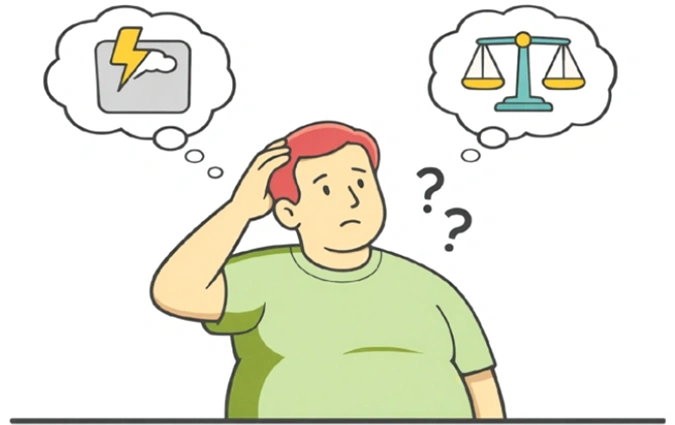
There are 3 main factors that affect the likelihood of developing obesity.
Genetics
Some genes can increase your likelihood of gaining weight, feeling hungrier, and overeating2,5
Habits
(Behavioral)
Certain habits around eating, physical activity, and sleeping can lead to weight gain2,5
Environment
(Sociocultural)
Lack of safe places for outdoor activity, long commutes to work, and emotional stress add up to extra weight3,5
Resources For Obesity Care
These one-page posters are designed to give you at-a-glance information you can download, print, or share with coworkers and family members.
The information provided is for educational and informational purposes only. It is not intended to be a substitute for professional medical advice.
References: 1. https://www.cdc.gov/nchs/products/databriefs/db508.htm (Accessed April 8, 2026). 2. https://www.cdc.gov/obesity/php/about/index.html (Accessed April 8, 2026). 3. https://www.obesityaction.org/education-support/learn-about-obesity/causes/ (Accessed April 8, 2026). 4. https://stop.publichealth. gwu.edu/understanding-obesity (Accessed April 8, 2026). 5. https://www.obesityaction.org/education-support/learn-about-obesity/common-myths/ (Accessed April 8, 2026). 6. Messineo L, et al. Sleep Med Rev. 2024;78:101996. 7. Jean-Louis G, et al. J Clin Sleep Med . 2008;4(3):261-272. 8. Shahar E, et al. Am J Respir Crit Care Med. 2001;163(1):19-25. 9. Khan SS, et al. JAMA Cardiol. 2018;3(4):280-287.