What You Should Know
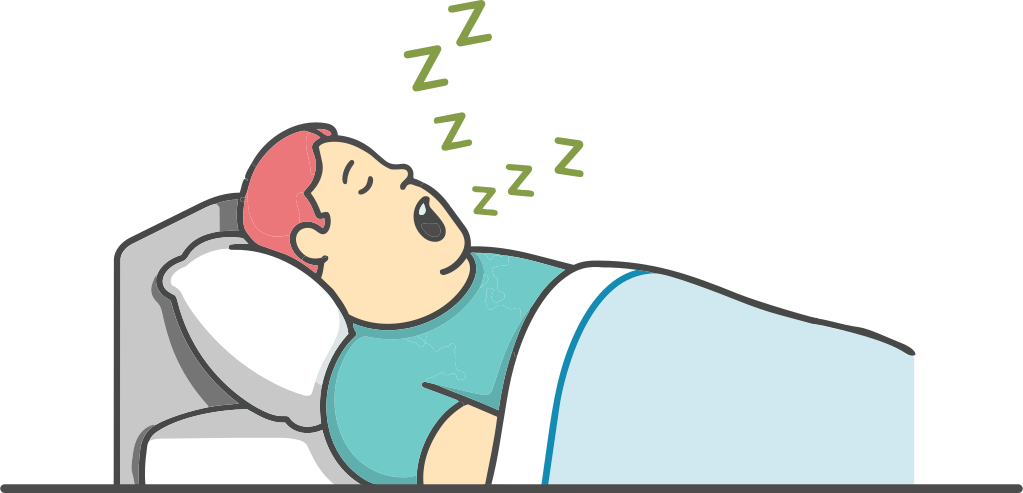
OSA is a common sleep disorder that causes breathing to start and stop during sleep.2
These breathing pauses can keep you from getting deep, restful sleep. Over time, this can lead to daytime fatigue and other health problems.2
Ed felt tired all the time. He didn’t realize sleep apnea might be the cause. Hear how his weight and sleep impacted his work and family life.
Brandi learned the signs and got tested. Listen to her story about how a diagnosis helped her feel better and live better.
Elvin & Alejandro thought their constant fatigue was just part of everyday life. Hear how getting tested for sleep apnea helped them regain their energy and feel like themselves again.
OSA can look different from person to person, but there are some common signs to watch for.
Snoring2,4,5
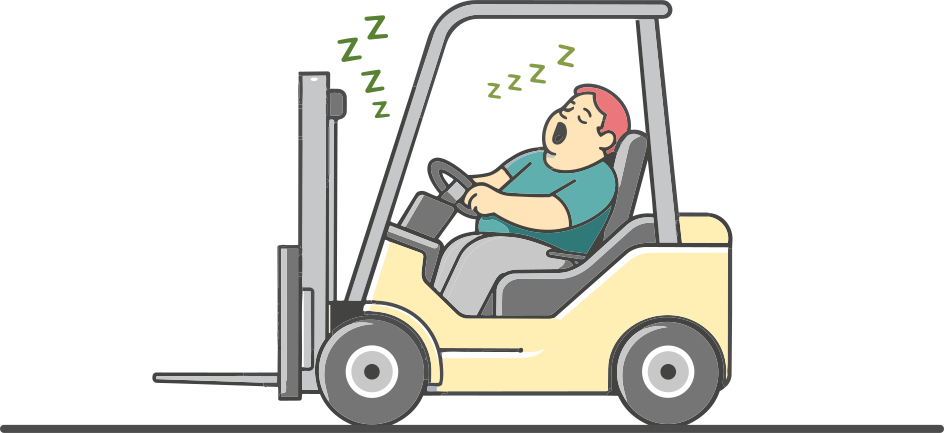
Daytime sleepiness2,4-6
Breathing pauses, choking, or gasping during sleep2,4,5
Untreated OSA can impact your heart health.8
The toolkit includes:
American Academy of Sleep Medicine
Alliance of Sleep Apnea Partners (ASAP)
Project Sleep
References: 1. Quan SF, et al. J Clin Sleep Med. 2008;4(3):210-211. 2. Chang JL, et al. Int Forum Allergy Rhinol. 2023;13(7):1061-1482. 3. Faria A, et al. Sleep Sci. 2021;14(3):257-265. 4. www.mayoclinic.org/diseasesconditions/obstructive-sleepapnea/symptoms-causes/syc-20352090 (Accessed April 8, 2026). 5. Meyer EJ, Wittert GA. J Clin Endocrinol Metab. 2024;109(3):e1267-e1279. 6. Stepnowsky C, et al. J Clin Sleep Med. 2019;15(2):235-243. 7. Kerner NA, Roose SP. Am J Geriatr Psychiatry. 2016;24(6):496-508. 8. Jean-Louis G, et al. J Clin Sleep Med. 2008;4(3):261-272.
The information provided is for educational and informational purposes only. It is not intended to be a substitute for professional medical advice.